


How to Invest $100 USD Online: Complete Beginner’s Guide 2026
Do you have $100 USD and want to start investing online but don’t know where to begin? This guide will show you exactly how to transform that small amount into the beginning of your journey toward financial freedom. As an experienced investor, I’ve personally tested multiple strategies and today I’ll share with you the real results of investing $100 USD in five different categories over four years. Discover which method works best according to your goals, risk tolerance, and available time.

Why Invest with Only $100 USD?
Many believe they need thousands of dollars to start investing, but this is a myth. With just $100 USD, you can take your first steps in the investment world thanks to modern platforms that allow fractional purchases and low investment minimums. The secret isn’t in the initial amount, but in starting early and being consistent.
The power of compound interest means that even small amounts can grow significantly over time. For example, $100 USD invested with an 8% annual return would become $466 USD in 20 years without adding more money. If you add $100 USD monthly, in two decades you would have over $58,000 USD.
Criteria for Evaluating Investment Options
Before diving into specific options, it’s important to understand how we’ll evaluate each investment method. We’ll use five key criteria:
1. Learning Curve
How much time do you need to understand the basics? Ideally, you want something you can quickly grasp as a beginner.
2. Passive Income Potential
Does the investment generate regular income without you having to sell your assets? Dividends and rental income are examples of passive income.
3. Tax Efficiency
Are there specific tax advantages for this type of investment? Accounts with tax benefits can significantly increase your net returns.
4. Risk Level
What’s the probability of losing money? How volatile is the investment’s value? Understanding risk is crucial for making informed decisions.
5. Potential Results
What historical returns has this investment had? While the past doesn’t guarantee the future, it gives us an idea of what to expect.

1. Individual Stocks: Investing in Specific Companies
Stocks represent fractional ownership in a company. When you buy a share of Apple, for example, you own a small part of that company. This can be exciting because you’re investing directly in businesses you believe will succeed.
Learning Curve: High
Investing in individual stocks requires significant research. You need to analyze financial statements, understand business models, and follow company news. It’s not as simple as choosing familiar names.
Passive Income Potential: Good
You can earn money with stocks in two ways: price appreciation (selling for more than you paid) and dividends (periodic payments to shareholders). Not all stocks pay dividends, but those that do provide passive income.
Tax Efficiency: Excellent
In many countries, special accounts protect your gains from taxes. In the UK, these are Stocks and Shares ISAs, and in the US, Roth IRAs. These accounts can make a big difference in your long-term returns.
Risk Level: High
Individual stocks are volatile. A company can have unforeseen problems that dramatically drop its price. It’s important to diversify and not put all your eggs in one basket.
Results of My $100 USD Investment
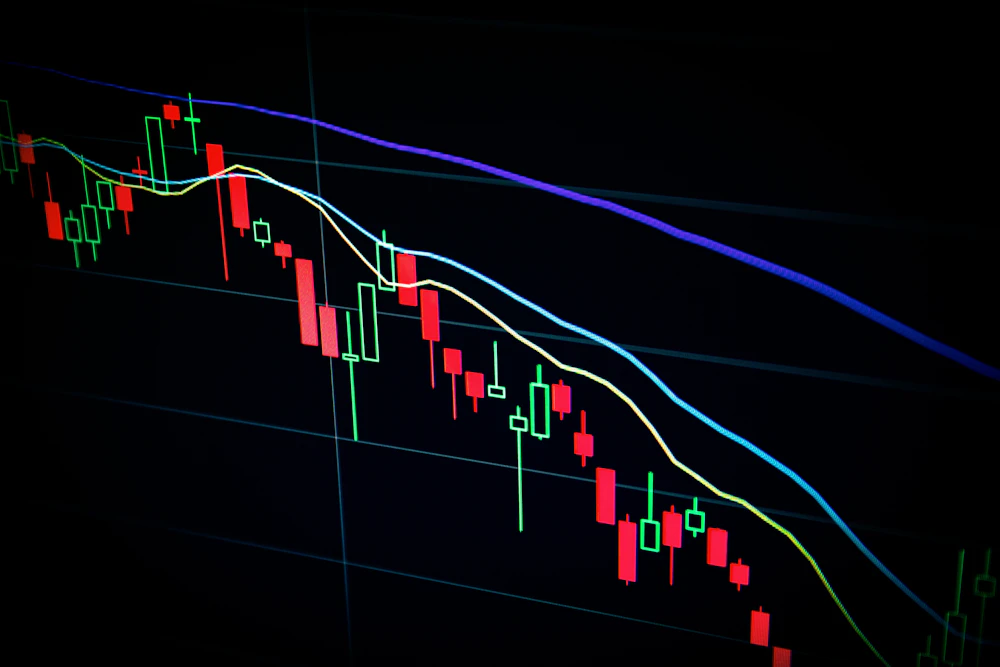
Four years ago, I randomly invested $100 USD in Samsung shares. Today, that investment is worth $67.76 USD (including dividends), a loss of 32.24%. However, if I had chosen Apple, I would have $170 USD; Microsoft, $188 USD; or Nvidia, $908 USD.
2. REITs: Accessible Real Estate Investment
Real Estate Investment Trusts (REITs) allow you to invest in properties without having to buy a complete one. Imagine you and 3,000 people pool money to buy a shopping center and share the rental profits. This is basically how REITs work.
Learning Curve: Moderate
REITs are simpler than buying physical properties, but you still need to understand how they work. They own different types of properties (offices, shopping centers, apartments) and generate income mainly through rents.
Passive Income Potential: Excellent
By law, REITs must distribute at least 90% of their profits to investors. This means they usually offer attractive dividends. Many leases are long-term, providing stable income streams.
Tax Efficiency: Excellent
As with stocks, you can hold REITs in tax-advantaged accounts. In the UK, ISAs protect your dividends and capital gains from taxes.
Risk Level: Intermediate
REITs are less risky than individual stocks because they invest in multiple properties. However, they’re still subject to real estate market risks. During the pandemic, for example, some commercial REITs suffered when people stopped frequenting offices and shopping centers.
Results of My $100 USD Investment
My $100 USD investment in a REIT four years ago is worth $98.59 USD today, a slight loss of 1.41%. However, I received $11.93 USD in dividends, meaning I actually made a total profit of $10.52 USD (10.52%).
3. Cryptocurrencies: High Risk, High Potential Reward
Cryptocurrencies are decentralized digital money. Bitcoin and Ethereum are the most well-known, but thousands exist. They work with blockchain technology that makes them secure and transparent.
Learning Curve: Moderate
You need to understand concepts like wallets (digital wallets), exchanges (trading platforms), and tokenomics (supply and demand of the cryptocurrency). It’s not as complicated as it seems, but requires learning.
Passive Income Potential: Moderate
Cryptocurrencies don’t pay dividends, but there are methods like “staking” (participating in the network) and “yield farming” (lending crypto) that can generate passive income. These methods carry additional risks.
Tax Efficiency: Poor
Cryptocurrencies generally can’t be held in tax-advantaged accounts. Additionally, each transaction (even exchanging one crypto for another) can be a taxable event in many countries.
Risk Level: Very High
Cryptocurrencies are extremely volatile. Bitcoin has been the best-performing asset of the last decade, but it has also experienced dramatic drops. Many smaller cryptocurrencies have lost all their value.
Results of My $100 USD Investment
My $100 USD investment in Bitcoin four years ago is worth $652.24 USD today, a return of 552.24%. However, this exceptional performance is not typical of most cryptocurrencies.

4. Gold: Traditional Value Protection
Gold has been a store of value for thousands of years. It’s often considered a “safe haven” during economic crises or high inflation.
Learning Curve: Low
Investing in gold is relatively simple. You have two main options: physical gold (bullion, coins) or exchange-traded funds (ETFs) that track the price of gold.
Passive Income Potential: Zero
Unlike stocks or REITs, gold doesn’t generate income. It’s purely a price appreciation game. You buy hoping it will be worth more in the future.
Tax Efficiency: Good
Depending on your country and the type of gold, there may be tax advantages. Some gold coins have legal tender status and are exempt from capital gains tax. Gold ETFs can be held in tax-advantaged accounts.
Risk Level: Intermediate
Gold is less volatile than stocks or cryptocurrencies, but has lower growth potential. Its main advantage is capital preservation during turbulent times.
Results of My $100 USD Investment
My $100 USD investment in a gold ETF four years ago is worth $140.10 USD today, a return of 40.1%. Solid but modest growth compared to some other options.
5. Index Funds: The Most Recommended Option for Beginners
Index funds are baskets of stocks that replicate a specific index like the S&P 500. Instead of choosing individual stocks, you invest in the entire market.
Learning Curve: Low
Index funds are passive investments. You don’t need to research individual companies or make frequent decisions. Simply invest regularly and let the market do its work.
Passive Income Potential: Moderate
Many index funds pay dividends that are distributed to investors or automatically reinvested. Although not as high as some REITs, they provide consistent passive income.
Tax Efficiency: Excellent
You can hold index funds in tax-advantaged accounts, protecting your dividends and capital gains from taxes. This can significantly increase your long-term returns.
Risk Level: Low
Index funds are diversified by nature. Instead of relying on the success of a single company, you invest in hundreds or thousands. Historically, the S&P 500 has had average annual returns of 8-10% over the long term.
Results of My $100 USD Investment
My $100 USD investment in an S&P 500 index fund four years ago is worth $179.57 USD today, a return of 79.57%. Solid and consistent growth with less risk than individual stocks.

Direct Comparison: The 5 Investment Options
| Investment Option | Learning Curve | Passive Income | Tax Efficiency | Risk Level | 4-Year Return |
|---|---|---|---|---|---|
| Individual Stocks | High | Good | Excellent | High | -32.24% (specific example) |
| REITs | Moderate | Excellent | Excellent | Intermediate | +10.52% |
| Cryptocurrencies | Moderate | Moderate | Poor | Very High | +552.24% (Bitcoin) |
| Gold | Low | Zero | Good | Intermediate | +40.1% |
| Index Funds | Low | Moderate | Excellent | Low | +79.57% |
How to Choose the Best Option for You
There’s no single “best” investment for everyone. The right choice depends on your personal circumstances, goals, and risk tolerance. Here’s help deciding:
If You Value Simplicity
Choose index funds. They’re the simplest option for beginners and require less research and monitoring time.
If You’re Looking for Passive Income
Consider REITs. They offer attractive and consistent dividends, ideal for those seeking regular income streams.
If You Have High Risk Tolerance
You could allocate a small portion to cryptocurrencies or growth individual stocks. Never more than 5-10% of your total portfolio.
If You’re Concerned About Inflation
Include some gold in your portfolio. It works as a hedge against currency devaluation and economic uncertainty.
Recommended Platforms to Get Started
Here are some popular platforms that allow you to start investing with $100 USD or less:
Trading 212
Excellent for beginners. Offers demo accounts, fractional purchases, and an intuitive interface. Available in many countries.
Coinbase
One of the most reliable and easy-to-use cryptocurrency platforms. Ideal for those wanting to start with Bitcoin and Ethereum.
Vanguard
The leader in index funds with low fees. Perfect for long-term investors who prefer the passive strategy.
eToro
Offers a wide range of assets including stocks, cryptocurrencies, and ETFs. Has social features to learn from other investors.
Common Mistakes to Avoid
As a beginner, it’s easy to make costly mistakes. Here are the most common ones and how to avoid them:
1. Waiting to Start
The biggest mistake is not starting. Time is your greatest ally thanks to compound interest. Even with small amounts, starting early makes a big difference.
2. Investing Without Researching
Don’t invest in something you don’t understand. Take time to learn the basics before putting your money in.
3. Letting Emotions Drive Decisions
Fear and greed are bad advisors. Avoid buying when everyone is euphoric and selling when there’s panic. Maintain a disciplined strategy.
4. Not Diversifying
Putting all your money in a single investment is extremely risky. Diversify across different assets and sectors.
5. Ignoring Costs
Fees and commissions can significantly erode your returns over time. Choose platforms with low costs.

Step-by-Step Action Plan for Beginners
Follow these steps to begin your investment journey with $100 USD:
- Set your goals: Why are you investing? Retirement, down payment for a house, education? Define your time horizon.
- Assess your risk tolerance: How would you react if your investment dropped 20%? Be honest with yourself.
- Educate yourself: Dedicate time to learn the basics. Read articles, watch educational videos, and consider investment books.
- Choose a platform: Select a platform that fits your needs and preferences.
- Start with index funds: As a beginner, index funds are generally the best initial option.
- Automate your investments: Set up regular contributions to take advantage of dollar-cost averaging.
- Monitor and adjust: Review your portfolio periodically, but avoid making frequent changes based on short-term fluctuations.
- Maintain a long-term perspective: Successful investments require patience and discipline.
Frequently Asked Questions About Investing for Beginners
Can I really start with just $100 USD?
Yes, absolutely. Many modern platforms allow fractional purchases, meaning you can buy a portion of a stock or ETF with as little as $5-10 USD.
How often should I invest?
Consistency is more important than amount. Investing $100 USD monthly is better than $1,200 USD once a year thanks to dollar-cost averaging.
Do I need to pay taxes on my gains?
It depends on your country and the type of account you use. Tax-advantaged accounts like ISAs or Roth IRAs can protect your gains from taxes.
What should I do if my investment loses value?
Short-term fluctuations are normal. Unless the fundamental reason you invested has changed, stay calm and maintain your long-term strategy.
Should I hire a financial advisor?
For most beginners with modest amounts, it’s not necessary. You can learn the basics yourself. Consider an advisor when your financial situation becomes more complex.
Conclusion: Your Investment Journey Starts Today
Investing $100 USD online is completely possible and can be the first step toward your financial independence. As we’ve seen, there are multiple options, each with its advantages and disadvantages.
For most beginners, index funds represent the ideal balance between simplicity, risk, and potential return. They’re the solid foundation on which you can build your investment portfolio.
Remember that successful investing isn’t about timing the market, but time IN the market. Start early, be consistent, and maintain a long-term perspective. The $100 USD you invest today could become a significant amount with the power of compound interest.
Ready to begin? Choose a platform, educate yourself, and take your first step today. Your financial future will thank you.
Additional Resources
To continue your financial education, consider these resources:
